Our trainer (should) know!
There are so many programs tailored for new mothers, from Yoga and Pilates to running and weightlifting. However, when is it “safe” to start a fitness program after pregnancy? Your mind may crave physical activity, but is your body ready to support it, and when?
If a new mother exercises before her body has physiologically recovered after childbirth, and before she has sufficiently regained strength and function of her Pelvic Floor and abdominal muscles, she becomes prone to injuries, vulnerable to pain, and at risk for potential permanent diastasis recti, as well as symptoms like urinary incontinence and prolapse. If the exercise program is not suitable for the postnatal body, then the risk of injury and dysfunction increases further. Even exercises like Kegel’s, popular for addressing Pelvic Floor disorders, can prove harmful if not performed at the right time and in the correct way.
For Trainers
Are you capable of safely guiding a postpartum woman in a program that will help her regain her muscle tone and elasticity without the risk of injuries? There are 5 signs that indicate a new mother may not be ready to exercise:
- Diastasis recti
- Urinary incontinence
- Feeling of heaviness or pressure in the vaginal area (prolapse)
- Pelvic pain during sexual intercourse or unexplained pain in the area
- Presence of tight scar tissue around the cesarean section or perineum from an episiotomy
If the postpartum woman presents one or more of these “signs,” it is essential, as her trainer or as a certified instructor of Pilates, Yoga, or any other fitness method, to refer her to a physiotherapist trained in the prevention/restoration of musculoskeletal changes associated with pregnancy and childbirth BEFORE STARTING EXERCISE, so that potential dysfunction can be evaluated.
The physiotherapist, in turn, should assess for possible Diastasis Recti, Pelvic Floor dysfunction (bladder, bowel, prolapse, dyspareunia, sexual dysfunction), lumbopelvic instability, and examine the restoration of core stability or reintegration into exercise, especially if the woman was physically active prior to her pregnancy.
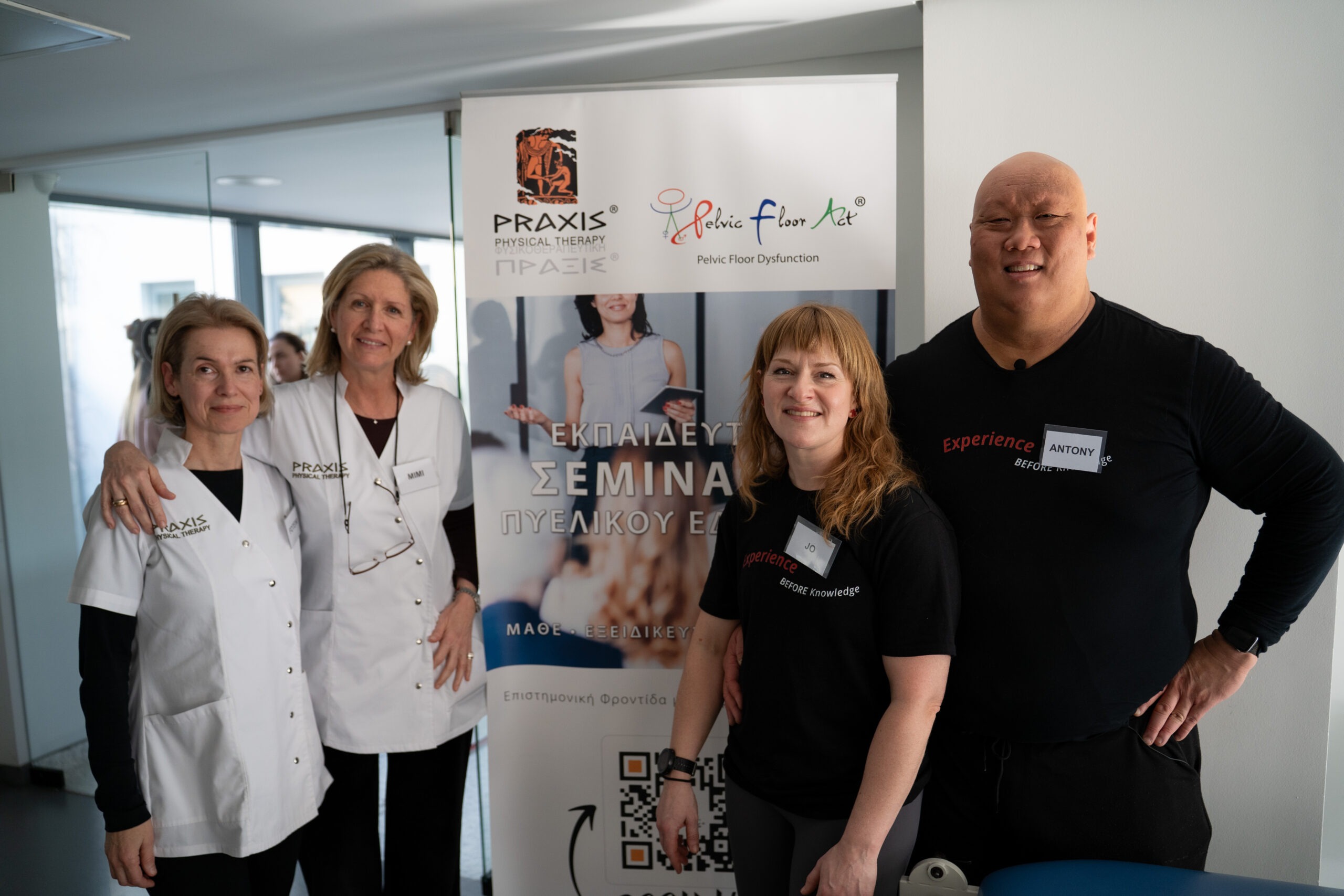
PT PRAXIS®, with scientific knowledge and years of experience in Pelvic Floor health, as well as recognized contributions within the interdisciplinary Pelvic Floor health community in Greece, is launching educational seminars for trainers and certified instructors of Pilates, Yoga, or any other exercise methods. These seminars aim to educate them on the new needs of the postpartum body and the ways to help women safely begin (or return to) exercise or any other physical activity.
Stay tuned.