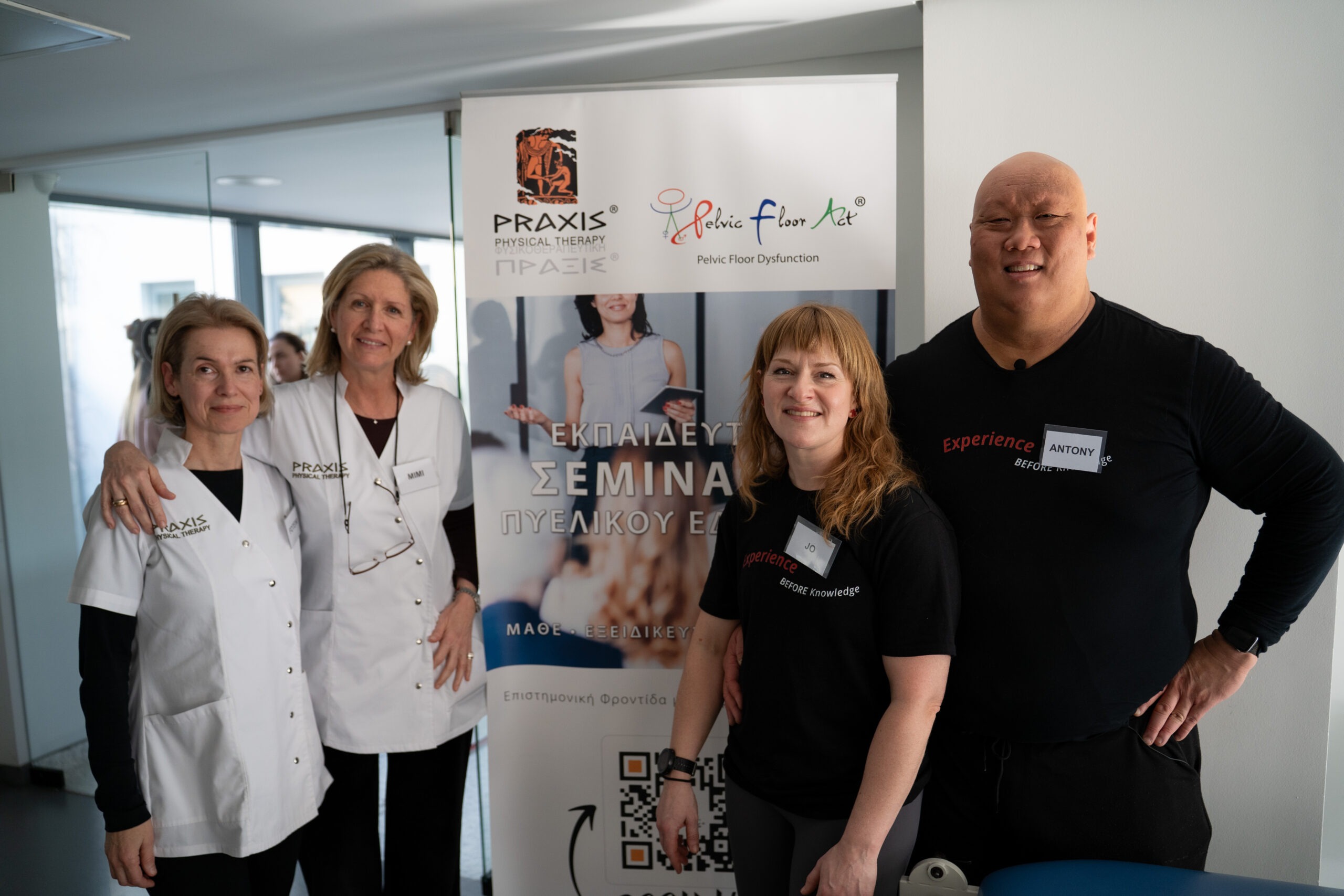
Mimi Marcellou, PT, MSc, PhD(c), one of the two founders and head of PT PRAXIS®, presented the findings of her research on breast cancer survivors and the impact of their treatments, known as the genitourinary syndrome, titled: “Genitourinary Syndrome of Menopause in Greek Breast-Cancer Survivors: A Cross-Sectional Study.”
The presentation, which took place at the 49th IUGA Annual Meeting in Singapore on June 20, 2024, was delivered as an e-poster presentation and summarized, in a comprehensive and conclusive manner:
- The symptoms of genitourinary syndrome (GSM) such as vaginal dryness, dyspareunia, etc., in Greek women who have survived breast cancer (BCS).
- The need for awareness among women experiencing GSM symptoms to address their bothersome or painful symptoms, including through physiotherapy. Eighty-three percent (83%) of the participants in the study were unaware of the possibility of treating their symptoms with physiotherapy.
- The need for further research on the effectiveness of physiotherapy in managing GSM and its impact on women who have survived breast cancer.
- The further education of Greek healthcare professionals, as the evaluation of GSM and its symptoms and treatment with pelvic floor physiotherapy should be incorporated into the standard therapeutic approach of the national healthcare system for this population.
In her presentation, Ms. Marcellou discussed the Genitourinary Syndrome of Menopause (GSM) and how it affects breast cancer survivors (BCS), causing symptoms such as vulvovaginal dryness, irritation, dyspareunia, and reduced sexual response. These symptoms typically have a significant impact on sexual function and quality of life. Treatments for GSM include systemic and local hormone therapies, vaginal moisturizers, lubricants, CO2 laser therapy, and pelvic floor physiotherapy (PFPT). PFPT is particularly noted for its non-invasive nature and low risk of side effects, but remains a largely unknown field and underutilized by both patients and healthcare providers, despite its positive results.
The purpose of the presentation was to highlight how GSM symptoms affect Greek women who have survived breast cancer (BCS).
The study involved 108 Greek women BCS over the age of 30, with a mean age of 52.1 years and a mean Body Mass Index (BMI) of 25.7 kg/m², with a maximum duration of endocrine treatment of 5 years and a disease duration of 2.9 years. 93.3% of the women were undergoing endocrine therapy, and 11.1% had metastatic disease. Demographic and clinical characteristics were collected through individual interviews.
Reported GSM symptoms included: 85.2% vaginal dryness, 60.2% dyspareunia, 37.0% vaginal stenosis, and 27.8% urinary incontinence. Notably, 83% were unaware that PFPT could alleviate their GSM symptoms.
In her conclusions, Ms. Marcellou stated: The majority of the study population reported GSM symptoms, with the highest recorded rates being vaginal dryness and dyspareunia. The prevalence of GSM in Greek BCS justifies greater emphasis on its inclusion in the formal education of healthcare professionals. The study also shows that most BCS were unaware that PFPT was a treatment option for GSM. Further research on the effectiveness of PFPT in improving GSM symptoms and quality of life in this population could help establish relevant treatment guidelines that may raise awareness among healthcare providers and BCS patients about this therapeutic option.
Her e-poster presentation at the IUGA 2024 Annual Meeting in Singapore on June 20, 2024, would not have been possible without her ongoing effort and dedication, as well as the invaluable collaborations from the academic and scientific community. Recognizing the valuable contributions of her collaborators, Ms. Marcellou expressed:
“I would like to express my sincere gratitude to my supervising professors, Dr. George Papathanasiou and Dr. Kari Bø, for their continuous and invaluable assistance and support throughout this endeavor. I would also like to thank my exceptional research collaborators and co-authors Dr. Sonia Stasi for her tireless guidance and patience, and my excellent colleague and companion Konstantina Sideri for her invaluable support in data collection and dedication to our research project. This work was made possible thanks to their efforts, insightful observations, and effective collective effort. Warm thanks also to the distinguished breast surgeons for their contributions to our work: Fiorita Poulakaki (Athens Medical Center), Sofia Filippidou (member of the surgical team of Grigoris Xepapadakis at IASO), and Efrosini Panopoulou (former member of the surgical team of G. Zografou, “Hippokration”), and I wish them continued support. Finally, a big thank you to the organizations Alma Zois and Europa Donna Hellas for their trust in our work. I know, and you all know well, that the path of our study is difficult and uncharted. Nevertheless, I hope that our efforts will continue to be supported and that in the future we can achieve even more significant results for improving the quality of life of women after breast cancer.”